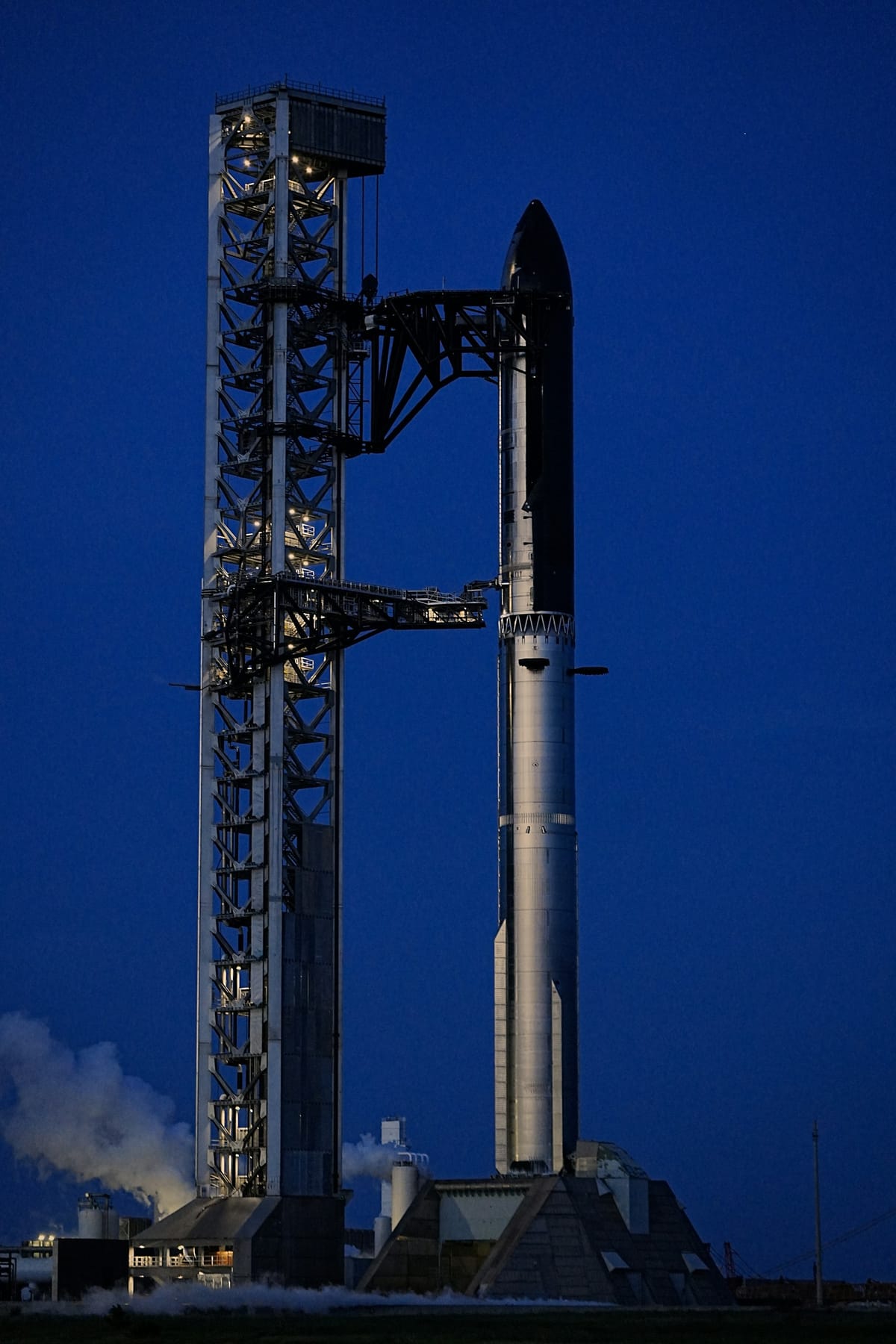
SpaceX has done something no one had done before: it brought the upper stage of its Starship rocket back from orbit and caught it with the mechanical arms of its launch tower. Ship 42 returned to Starbase in South Texas on Saturday, November 14, at about 1:30 p.m. PT (4:30 p.m. ET), roughly 22.5 hours after it lifted off on Flight 15.
SpaceX had already caught its Super Heavy booster with the tower three times on earlier flights. Catching the ship, which has to survive a fiery reentry from orbital speed first, is a different and much harder problem, and it is the piece SpaceX says it needs to make Starship fully and rapidly reusable.
How the catch played out
After more than 20 hours of monitoring the vehicle in space, flight controllers relit a single Raptor engine for a roughly 10-second deorbit burn over the Pacific, according to SpaceX's flight summary and Aerospace America. The ship then reentered the atmosphere on its heat shield of about 18,000 ceramic tiles and headed for the Texas coast.
On approach, Ship 42 made a final swing out over the Gulf of Mexico, then lit three Raptor engines for its landing flip and slowed to a hover beside the tower. The tower's arms, nicknamed "chopsticks" and part of the structure SpaceX calls Mechazilla, closed around the vehicle. SpaceX's own timeline lists the landing burn and catch at about 22 hours and 32 minutes after liftoff.
CNBC reports that Elon Musk later posted a video on X of himself inspecting the ship after the capture.
A record stay in orbit
Flight 15 was only the second time a Starship has reached orbit, after Flight 14 in September. This time the ship went much further, completing 14 orbits of Earth instead of the one or two laps flown on the previous mission, according to Reuters reporting carried by Al Jazeera.
Shortly after reaching orbit on Friday, the ship deployed 26 Starlink V3 satellites. SpaceX says it made contact with every one of them and that they have begun raising their orbits to join the Starlink network.
The booster did not make it home
The other half of the plan, a tower catch of the Super Heavy booster minutes after launch, did not happen. SpaceX's flight summary says the booster relit 32 of its 33 planned engines for its boostback burn, but the burn ended early because of low fuel mass, with the root cause still under investigation. The booster's guidance system then triggered an automatic abort and steered itself to an offshore landing zone in the Gulf.
SpaceX says the booster completed a landing burn and hovered over the water before its flight termination system was triggered as the engines shut down. That means Flight 15 fell short of its headline goal of catching both stages on a single mission.
Why it matters
A rocket that can be caught, inspected and flown again without being fished out of the ocean is central to SpaceX's plans for Starship, from launching larger Starlink satellites to NASA's Artemis program, which is counting on a version of the ship to land astronauts on the Moon. Recovering the ship intact also gives engineers their first chance to examine a Starship's heat shield and engines after a full orbital flight and reentry.
Sources
- SpaceX: Starship Flight 15
- Aerospace America: SpaceX achieves first Starship tower catch
- CNBC: SpaceX catches upper stage of Starship rocket in historic first
- Al Jazeera: SpaceX's Starship captured by launchpad arms in dramatic first
- The Verge: Watch SpaceX successfully execute the first 'chopstick' catch of Starship